Central Java, Indonesia
Wedding Photographer in Solo
We live in Solo, and that changes how we photograph here. Not because we know the back roads when Slamet Riyadi jams, though that helps too. What matters more is this: we already know what hour the light comes through the pendopo doors, we know sungkeman almost always runs faster than planned, and we know the moment couples end up cherishing usually happens between the ceremonies, not inside them.
What makes a Solo wedding different
Solo and Yogyakarta traditions are often treated as one. In photographs the difference is obvious. Solo Putri paes uses a shallower outline and no gold prada like the Yogyakarta paes ageng, so the bride’s face depends far more on the direction of light — get it slightly wrong and the makeup flattens and loses its shape. The dress differs too: dodot bangun tulak, the bokor mengkurep bun, and fabric that needs room to fall properly. All of this settles our lens and our standing distance long before the day begins.
The sequence has its own rhythm as well. Siraman and midodareni happen at home, intimate and often dark. The ijab may be at a mosque or in the pendopo. Panggih is a short chain that holds several moments at once — balangan gantal, wiji dadi, kacar-kucur, dhahar klimah — and each happens exactly once, with no second take. A photographer seeing it for the first time will still be looking for position when the moment has already passed.
The rooms that shape the pictures
Solo has three kinds of space that ask for different approaches, and nearly every wedding here falls into one of them:
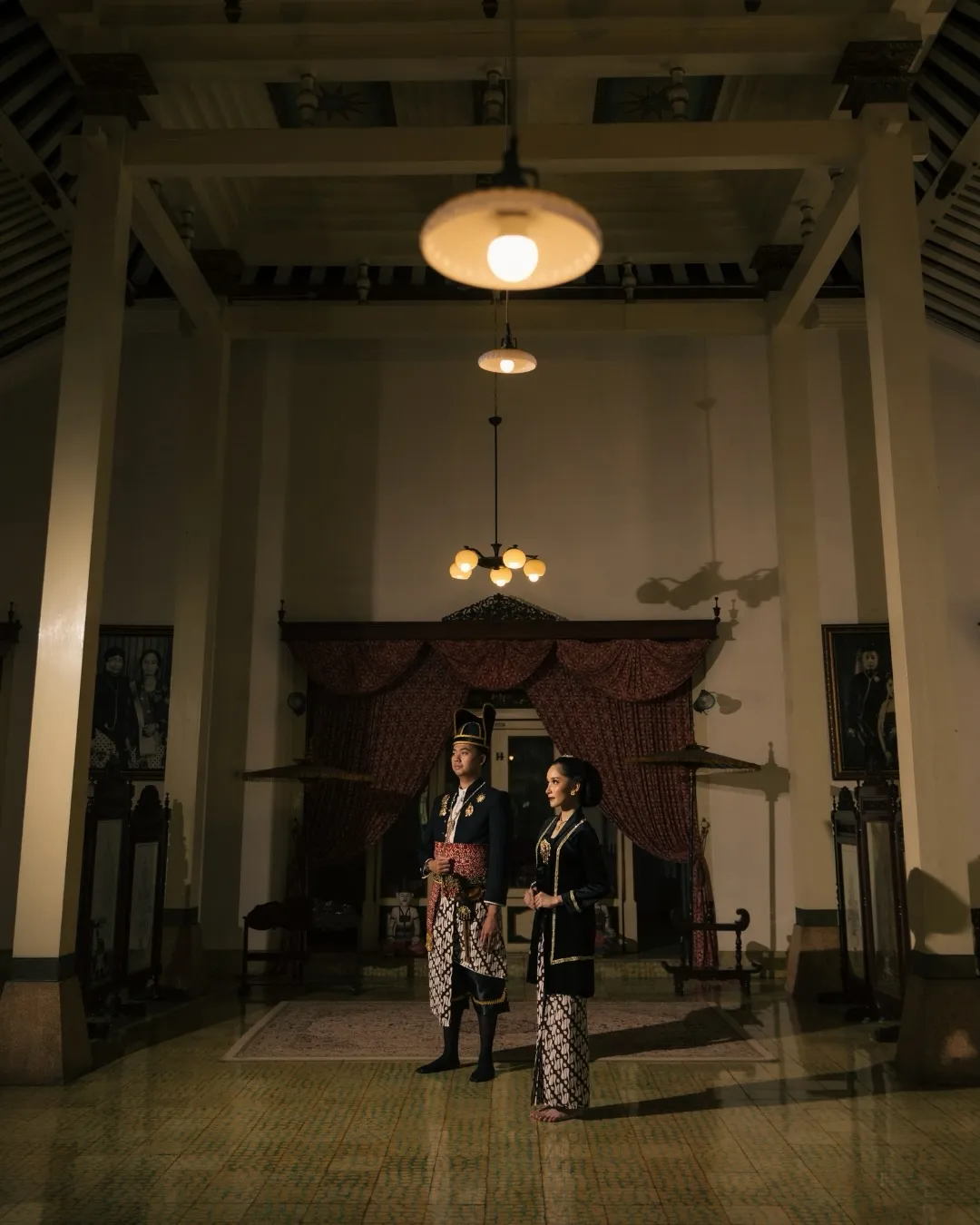
- Heritage dalem and pendopo — high ceilings, marble or terrazzo floors, and light that only enters through doors and windows. The most beautiful rooms in the city, and the darkest. We work by waiting for the light to reach the right place rather than adding our own.
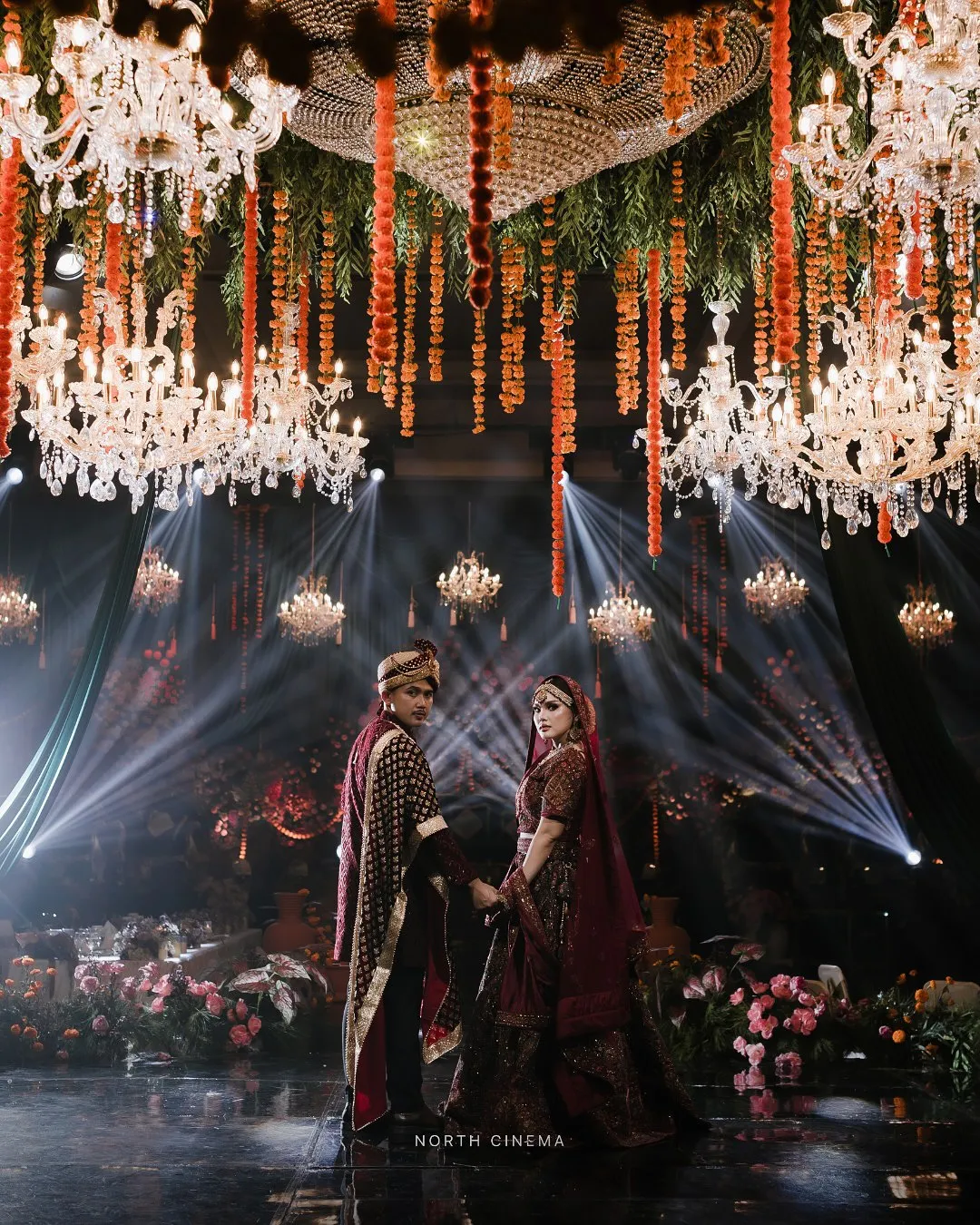
- Hotel ballrooms — bright, controlled and even. The challenge is the opposite: making a uniform room feel like it has weather. This is where stage lighting and tall florals become a frame to use rather than a problem to fight.
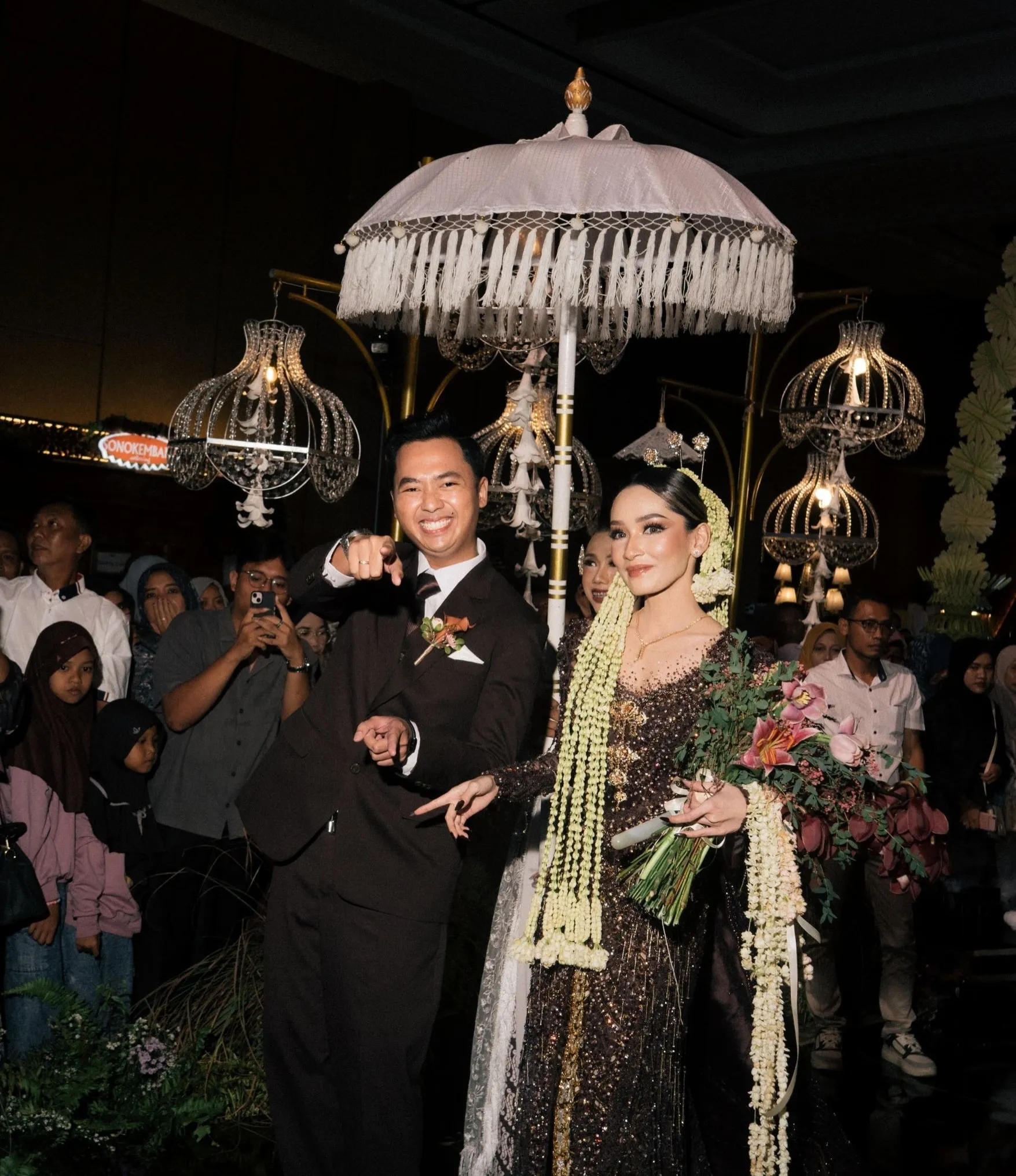
- Reception halls and homes — the least predictable and often the most alive. Guests stand close, phones go up everywhere. We do not try to clean that out of the pictures; it is part of the day as it actually happened.
Light, hours and season
Mornings in Solo hold a thin haze until about seven, and that is the best hour for anything happening in a courtyard. Between ten and two the light is overhead and hard — an outdoor ceremony at that hour means finding shade or using the floor as a reflector. The rainy season runs roughly November to March, and an afternoon downpour is ordinary rather than a disaster; we always have a way to move the couple session indoors without it looking like a fallback.
How we work here
We arrive early to walk the venue, find two or three places we will use, then disappear as much as we can. We do not stop a procession to repeat it, and we do not ask guests to step aside. If we direct anything it is usually the couple session, and even that is rarely more than fifteen minutes, because the day belongs to you and not to our list of poses.
For weddings outside Solo we travel from here. Yogyakarta, Semarang and nearby cities are a same-day trip; further afield we arrive the day before, so that no part of your day depends on traffic.
Works in Solo
Questions about photographing in Solo
Is North Cinema based in Solo?
Yes. Our studio is in Surakarta, and most of the weddings we photograph are in and around Solo. For other cities we travel from here, usually arriving the day before.
Do you know the Solo ceremonial sequence?
We do. Siraman, midodareni, the ijab, panggih with balangan gantal and kacar-kucur, through to sungkeman. We know each part happens only once and cannot be repeated, so our positions are decided before the procession starts rather than found while it runs.
Pendopo and old dalem are dark. How do you photograph them?
By waiting rather than adding light. Those rooms are lit only by their doors and windows, and that light moves through the morning. We place ourselves where the light will arrive and leave the room as it is. Added lighting makes a bright photograph but removes the very thing that makes the room beautiful.
How far ahead should we book?
For the busy months — roughly June to September and December — six to twelve months ahead. Outside that, three months is usually enough. We take one wedding per day, so a date that is taken truly cannot be doubled up.
What happens if it rains?
The rainy season in Solo runs roughly November to March, and an afternoon shower is ordinary. We always identify one or two sheltered spots inside the venue for the couple session while walking the place beforehand, so the result never looks like a fallback.
Do you photograph non-traditional or mixed weddings?
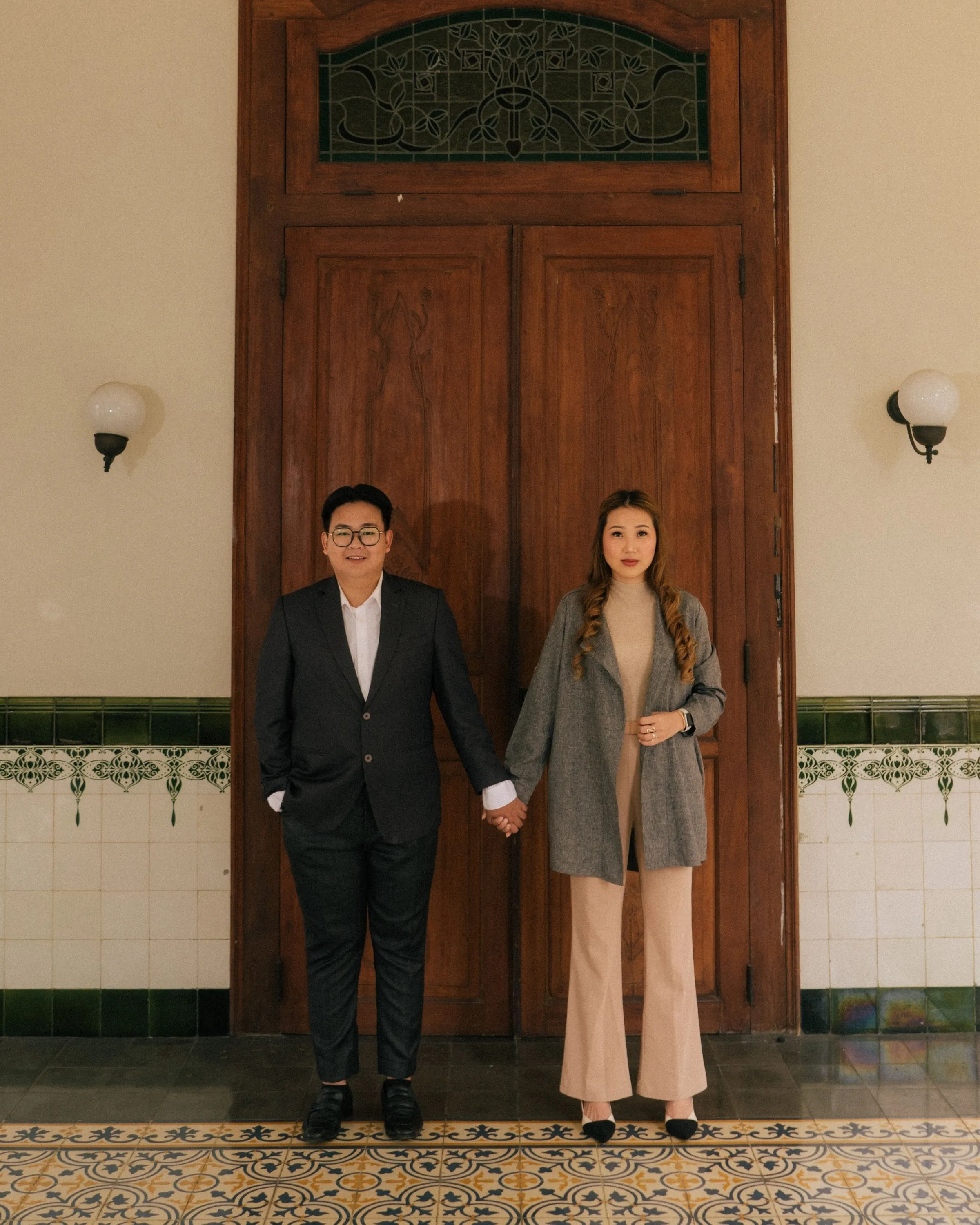
Yes. We photograph Javanese and Chinese ceremonies, simple ijab at home, and modern ballroom receptions. The approach is the same: watch first, direct as little as possible.
Getting married in Solo?
Tell us the date and the venue. We will tell you honestly whether we are right for that day.
Talk to us on WhatsApp+62 851-6990-0369